
India’s Defence Startup Ecosystem: iDEX, ADITI & the New Innovation Frontier
An institutional analysis of India’s defence innovation architecture — iDEX, ADITI, and the Defence Innovation Agency — and how startups are reshaping unmanned systems, counter-UAS, and software-defined warfare.
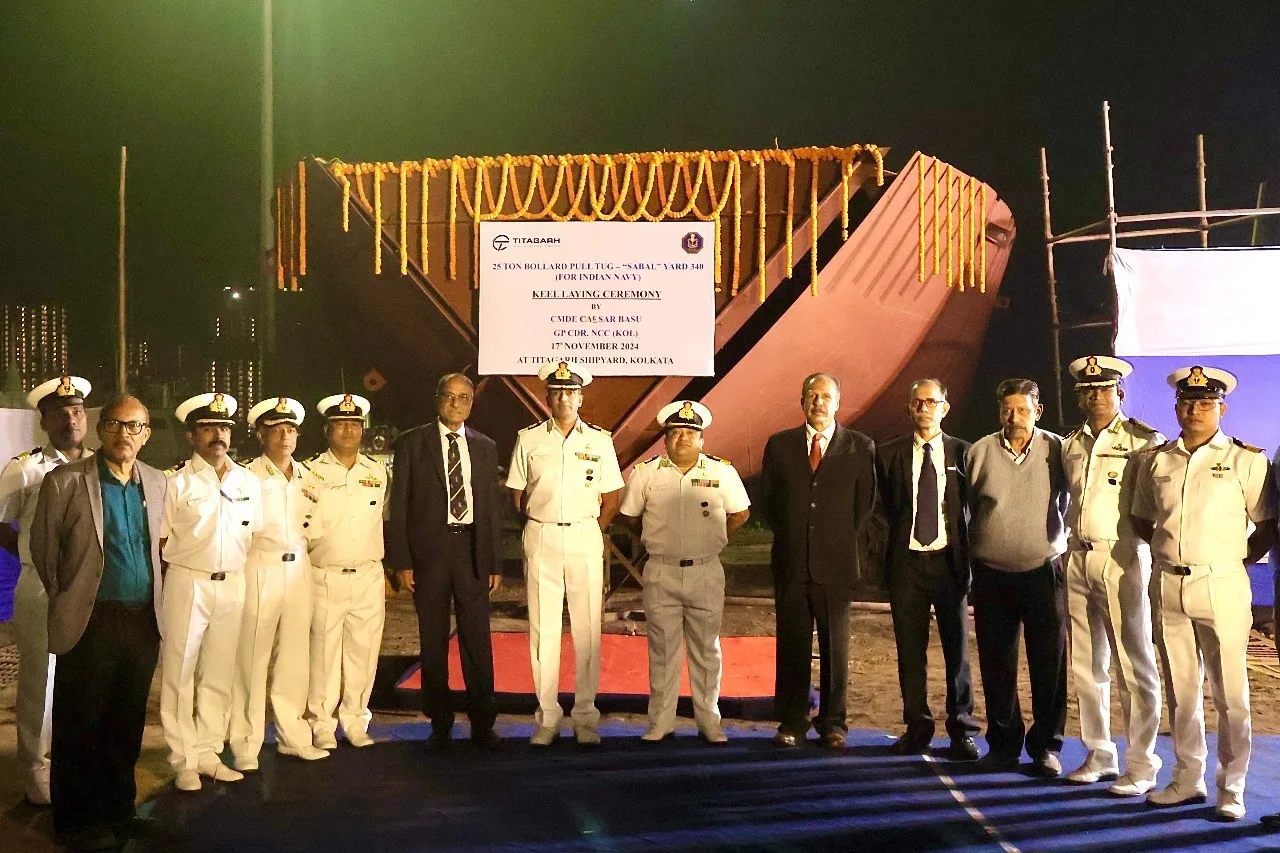
PLATE XV (PIB PRID 2074149 & PRID 2011452) — Launching of the indigenous 25T Bollard Pull Tug ‘Yuvan’ built under Indian Register of Shipping (IRS) classification rules by a domestic MSME shipyard.
1. Strategic Context
Modern warfare is increasingly defined by unmanned systems, software-defined platforms, and rapid iteration cycles — domains where startups and MSMEs hold structural advantages over legacy production lines. India’s defence innovation architecture is designed to capture that advantage at national scale.
2. The Innovation Architecture
2.1 iDEX: From Prototype to Production
The Innovations for Defence Excellence (iDEX) framework has onboarded hundreds of startups and MSMEs into defence production, funding prototypes in unmanned aerial systems, counter-UAS, electronic warfare, and secure communications — and, critically, converting successful prototypes into production contracts.
2.2 ADITI: Deep-Technology Challenges
The ADITI scheme targets deep-technology challenges — artificial intelligence, quantum-resistant communications, and autonomous systems — with larger funding envelopes and longer development horizons than conventional procurement.
2.3 The Defence Innovation Agency Model
The Defence Innovation Agency framework institutionalises the startup-to-Service pipeline, giving the Armed Forces a structured mechanism to scout, fund, and induct emerging technologies without the timelines of traditional acquisition.
3. Capability Domains in Focus
Priority domains include:
- Unmanned Systems: Loitering munitions, swarm platforms, and unmanned ground vehicles;
- Counter-UAS: Detection, jamming, and kinetic defeat of hostile drone swarms;
- Software-Defined Warfare: Modular mission systems, open architectures, and rapid software upgrades;
- Electronic Warfare: Spectrum dominance, resilient communications, and EW payloads.
4. Institutional Assessment
For the innovation pipeline to deliver sovereign capability at scale, three alignments remain essential:
- Prototype-to-Production Conversion: Ensuring iDEX winners receive assured production orders, not just grants;
- Test & Trial Access: Giving startups structured access to Service test ranges and evaluation infrastructure;
- IP & Data Sovereignty: Protecting startup intellectual property while securing sovereign data rights for the State.
Ministry of Defence (PIB) Disclosures & Doctrinal Synthesis
Official Government of India Press Information Bureau (PIB) records corroborated and synthesized for this research monograph under our 5-Level Verification Protocol.
Indigenous Carrier Battle Group Maturity: INS Vikrant (R11) and Multi-Axis Sea Control in the Western Indian Ocean
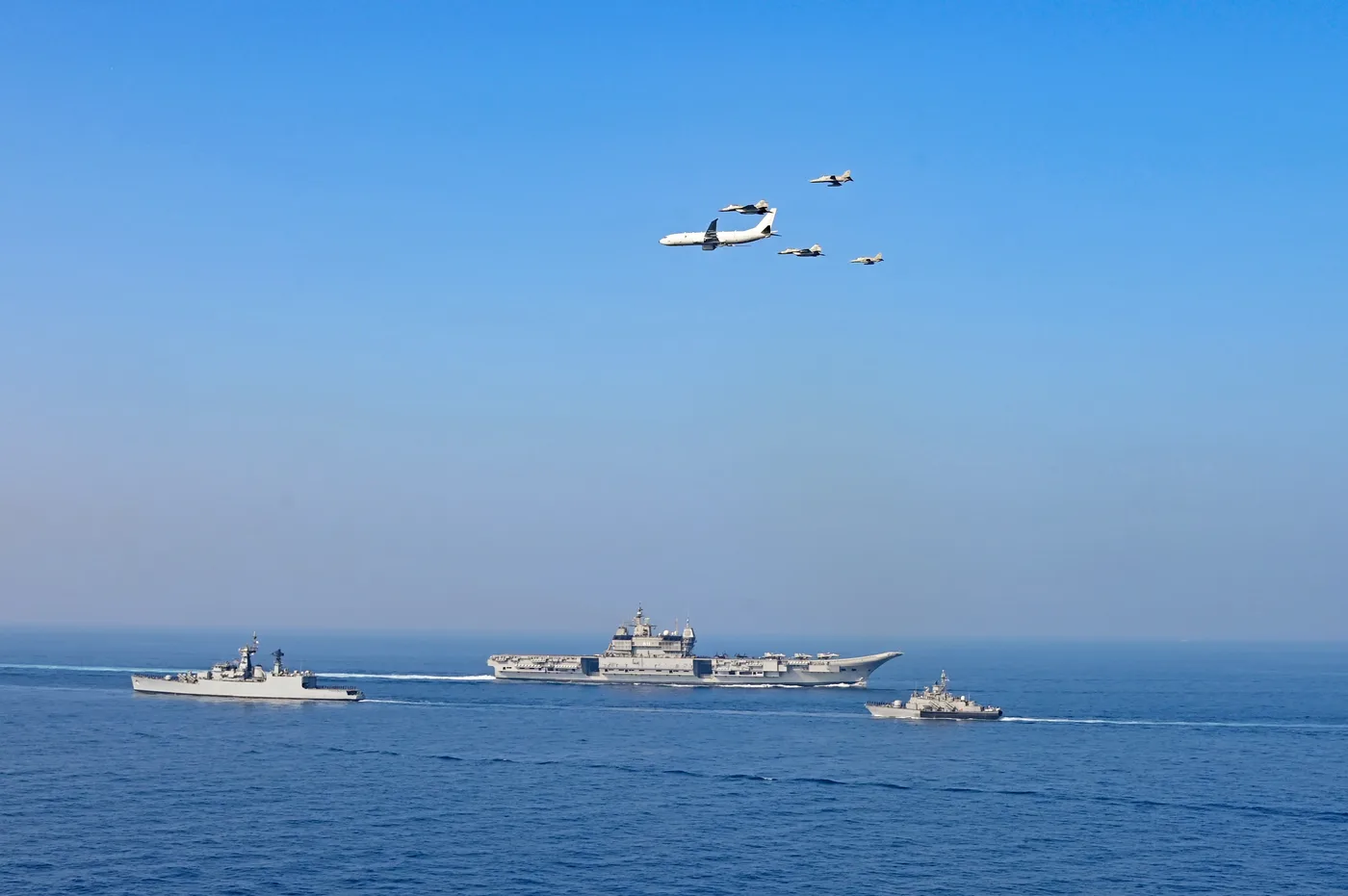
The Supreme Commander of the Armed Forces embarked Indigenous Aircraft Carrier INS Vikrant off Goa, observing 15 frontline surface combatants and submarines, deck-launched MiG-29K fighter operations, missile firing drills, and coordinated P-8I maritime patrol flypasts.
Transitioning INS Vikrant from sea trials to an integrated 15-ship Carrier Battle Group validates the Indian Navy’s two-carrier operational doctrine, enabling simultaneous sea-control task groups across the Arabian Sea and Bay of Bengal. Coupling deck-launched fighter sorties with P-8I anti-submarine warfare telemetry closes surveillance gaps across the Nine-Degree Channel, Bab-el-Mandeb approaches, and Western IOR sea lines of communication.
High-Mach Conventional Deterrence: Strategic Implications of DRDO’s Long-Range Hypersonic Glide & Anti-Access Strike Trial
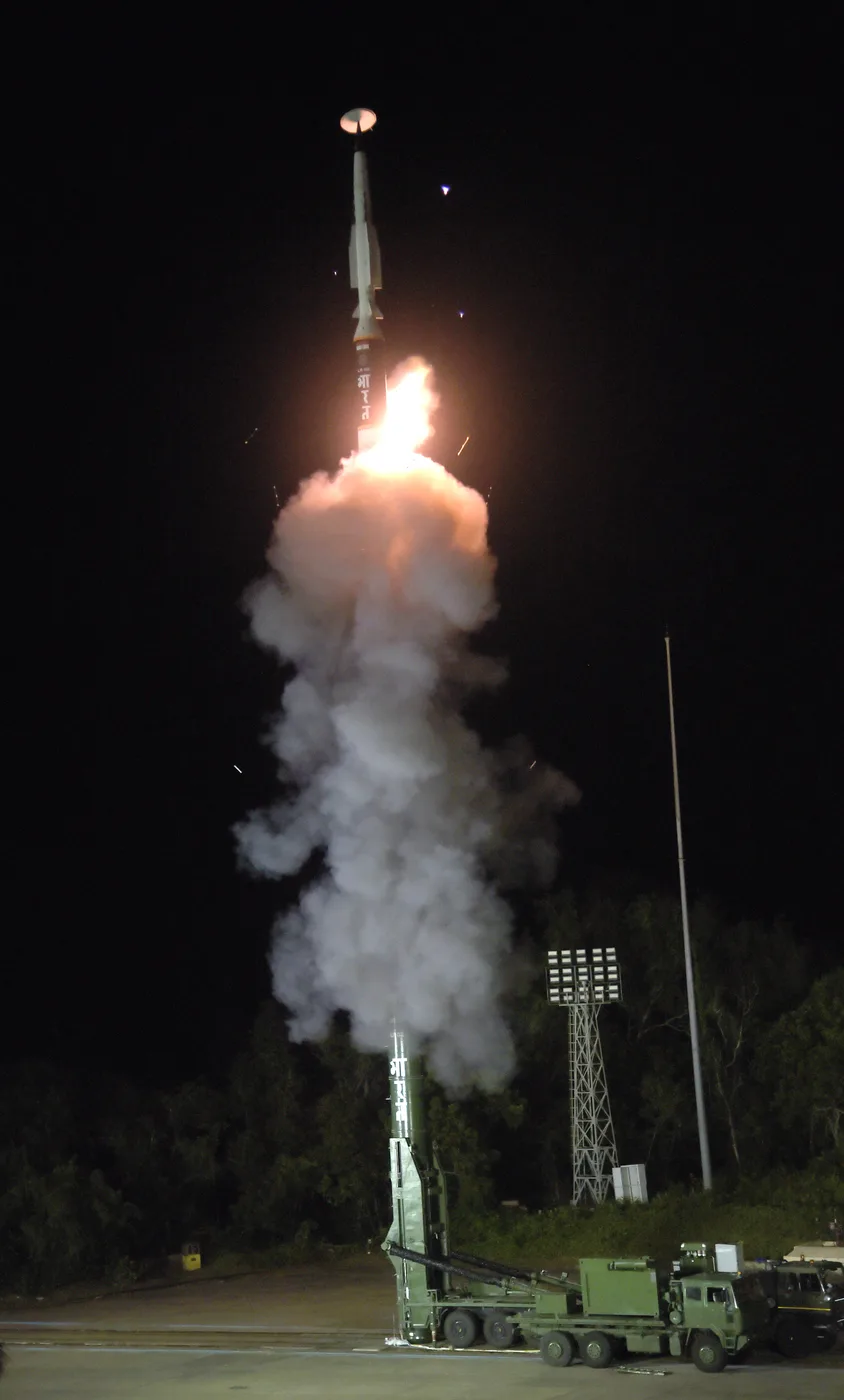
DRDO successfully flight-tested India’s first long-range hypersonic missile from Dr APJ Abdul Kalam Island off the Odisha coast. Designed to carry multiple payloads for ranges exceeding 1,500 km for all three Services, the missile was tracked by multi-domain downrange ship and range sensors, confirming high-accuracy terminal manoeuvres.
Entry into the operational hypersonic glide and manoeuvring strike club compresses adversary air-defence decision cycles along both high-altitude continental sectors and distant Indo-Pacific maritime choke points. Provides the proposed Integrated Rocket Force (IRF) and Tri-Service Theatre Commands with a non-ballistic, depressed-trajectory conventional counter-force option immune to legacy terminal missile defence batteries.
Institutionalising Jointness 2.0: CDS/DMA Command Integration, Joint Training Doctrine, and Theatre Command Readiness
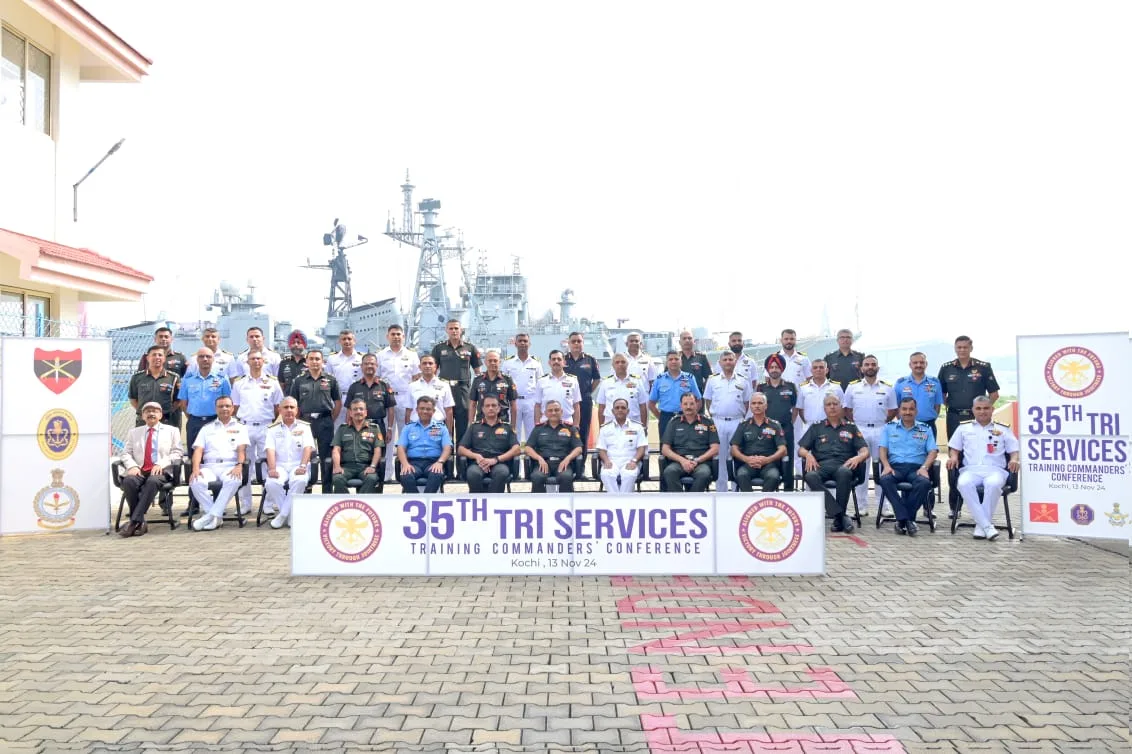
Chief of Defence Staff Gen Anil Chauhan chaired the 35th Tri-Services Training Commanders’ Conference at Southern Naval Command, Kochi, reviewing jointness in training, multi-domain warfighting curricula, and shared tri-service training infrastructure across the Indian Army, Navy, and Air Force.
True theatreisation cannot succeed via top-down organograms alone; standardising officer education, joint C4ISR staff procedures, and common logistics taxonomy at the Training Command level removes cultural stovepipes before operational theatre activation. Directly operationalises the statutory powers of the Inter-Services Organisations (Command, Control and Discipline) Act, 2023, preparing joint staff cadres for seamless cross-service postings.